
Find Your Painting Style in 30 Days

Developing a recognisable painting style that people associate specifically with you as an artist can feel out of reach. The questions I am asked most by learners my workshops is… “how can I find my style?”.
‘Why is it so hard to find my art style?’
In the early days of learning how to paint there seems to be so much to take in, creating artwork that is really “you” seems a world away. At this time, we are trying out so many materials and techniques that to pick a combination that we feel confident with and reflects who we are seems overwhelming.
During my experience of teaching art, I’ve noticed an anxiety that comes with this question from those starting out on their painting journey. It’s as though they expect to fall into a “style” a few weeks into their course and it’ll be plain sailing from then on.
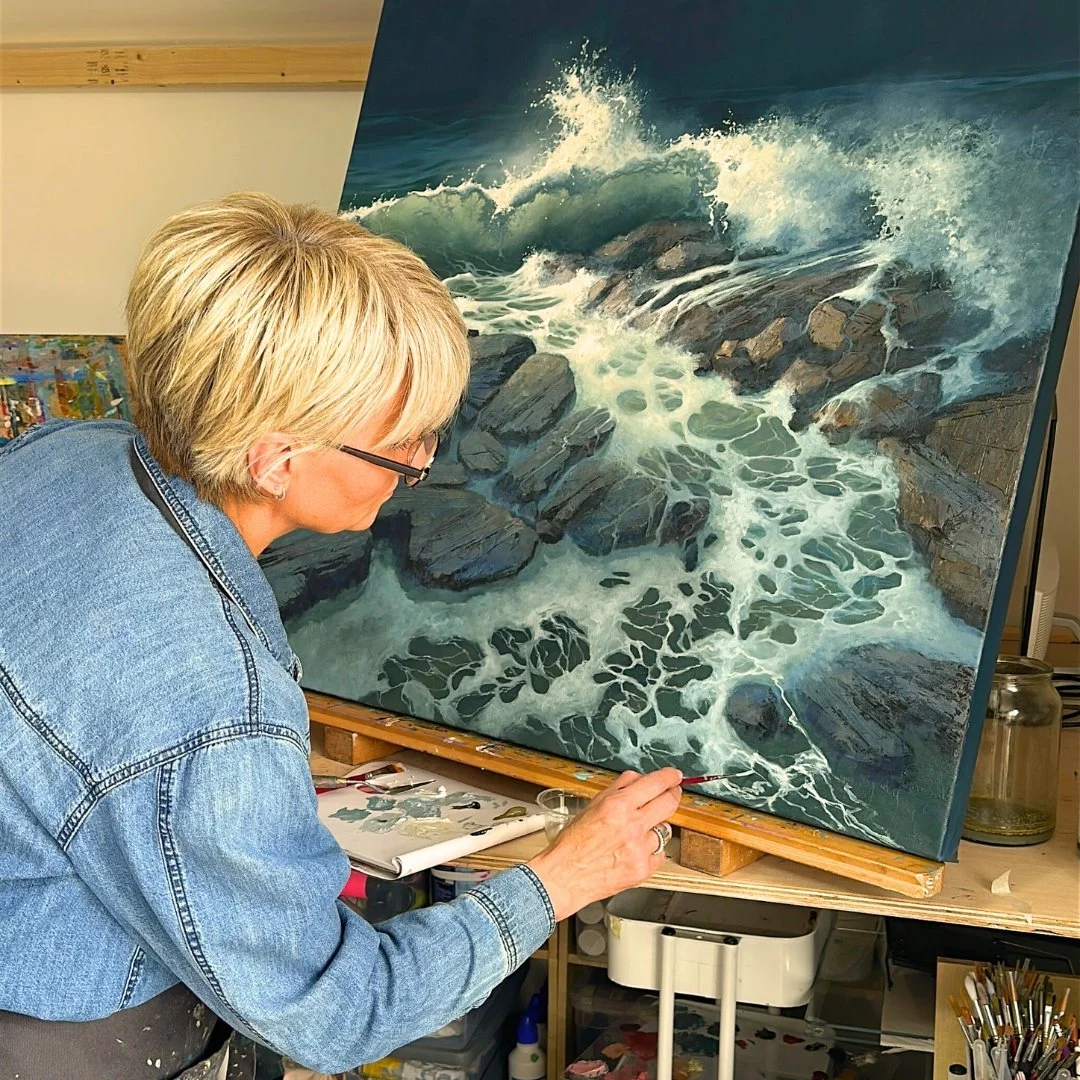
The truth is your natural, creative style as an artist has always been with you, since birth. It is in the way you see the world, the colours that excite you, the scenes that move you and the way your artistic brain wants to communicate with your hand. You can’t make it up and whilst we can admire other more seasoned artists and emulate their way of doing things we cannot just adopt the style of another.
It’s a bit like trying to write in someone else’s handwriting. At first you might manage a couple of sentences, but after a while your brain will become tired of the effort, and you will notice little nuances of your own handwriting working their way back in. In this way it’s like our DNA, it’s what we’ve been dealt, and some see handwriting style as a reflection of our personality. Art can be this too, unique and authentically ours. Perhaps this is where the phrase “signature style” comes in.
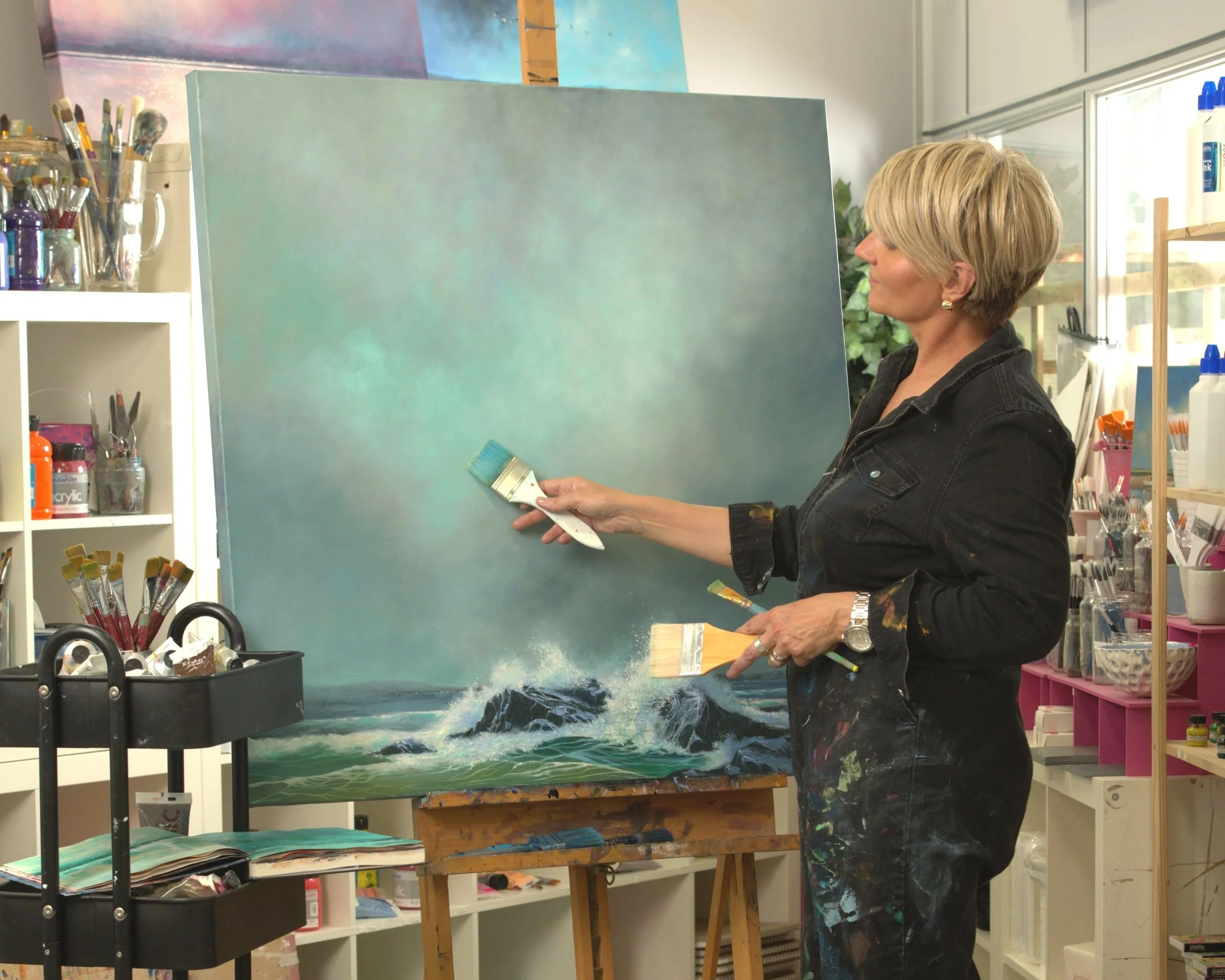
I have often spent far too long scrolling through pins of artists I admire, and I admit to occasionally having feelings of respectful envy. “What if I used more neon colours like they do?” or “What if I change my brushwork to be more like that guy?” until I am down the rabbit hole of completely questioning my own worth as an artist, and that can feel very negative.
In truth I know that once I am back in my studio and can put on my radio, shut off from the world and paint for my own pleasure, I can find I am no longer obsessing about my way of working, I’m just doing it. In fact, trying to be like someone else feels like hard work to me and so my brain slips back into its comfy ways, and I let go into my next creation.
Finding The Key To Unlock Your Painting Style
So when that question arises, my advice is always that you already have a style that is you, you just need to access it. And the most obvious simple trick is through…REPETITION. But in a structured specific way…
I follow the theory that if we can trick our ‘sensible’ brain into automatic pilot so that it wanders off for a break, our creative brain can jump in and take over. By creating a series of studies, using the same subject over 30 days, sensible brain will get tired but our creative brain will get excited and that’s when the magic starts.
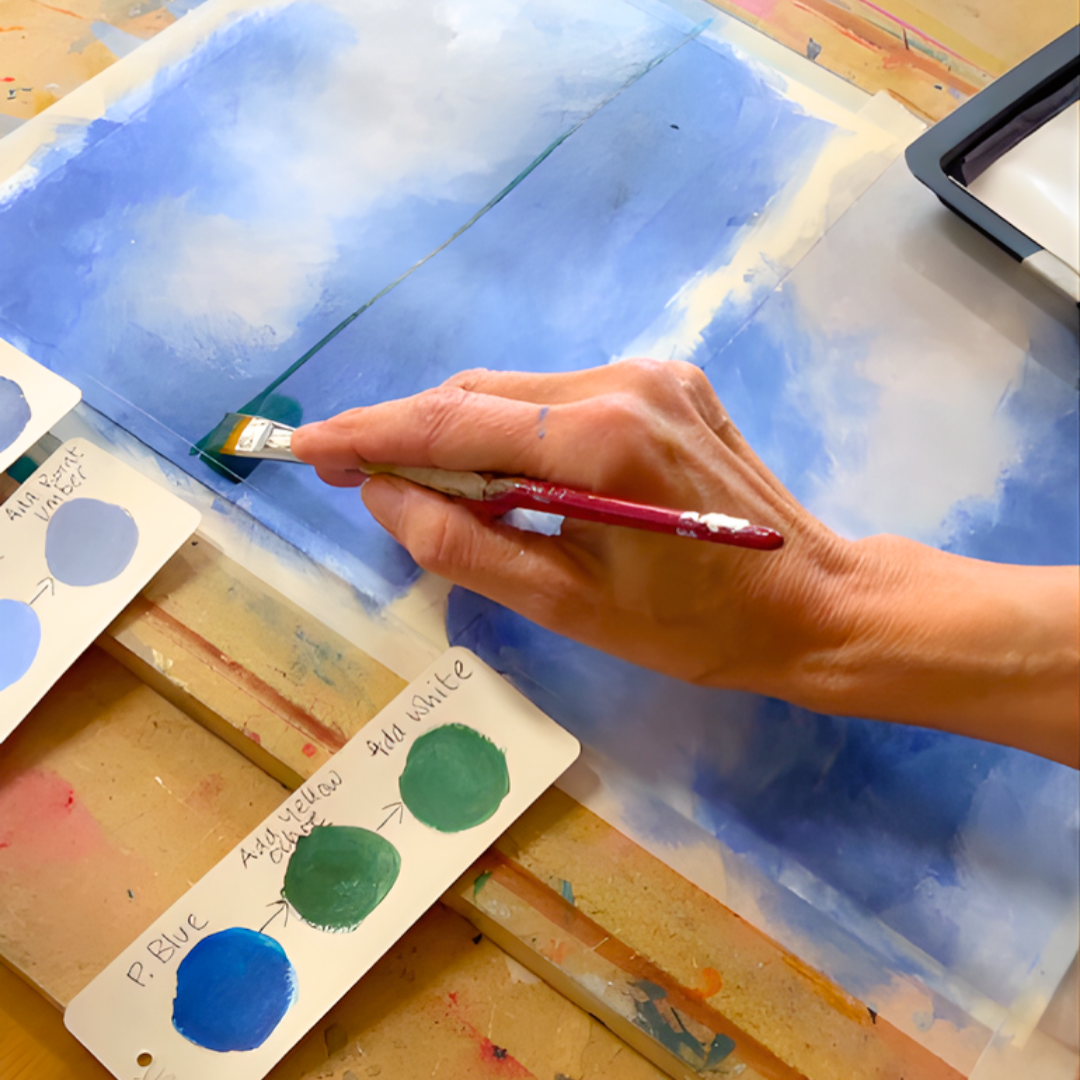
I love the idea that our brains are made up of two distinct halves. One side deals with all the detail stuff like accounts, organisation, rational thinking and generally being very sensible. It likes to be in charge, if possible, to get us through life but for an artist can sometimes get in the way. The creative brain, however, is the imaginative one, the ideas one, the thinking outside the box and solving problems one, and for me, the one that wants to paint if allowed out to play. Your creative brain knows your style, even if you don’t, and once unleashed will guide you if you let it.
Of course, scientifically this may be an oversimplified myth, but I find it helps us to understand how we might access our creativity!
Remember I mentioned the radio earlier? My sensible brain likes to listen to that and whilst it’s occupied, out of the way and not questioning my every brushstroke, my creative brain can get cracking. You might also like to think about it in the way of the conscious and sub-conscious mind.
There’s a lot more I could say about this subject, but I know you want to get to the details of the method so here goes…
The ‘Find Your Painting Style in 30 Days’ Method
The Find Your Painting Style in 30 Days method focuses your practice and creative decisions by repeating the same subject every day over a set period. Over a concentrated month you can reveal patterns in what you prefer in the way of colour, mark-making, composition, materials, and accelerate your growth as an artist through deliberate repetition.
Why Repeating One Subject Works
Doing a similar thing repeatedly reduces decision fatigue. With the subject choice fixed, your mental energy goes to how you paint, not what you paint. This method forces variation in the way you paint. The constraints in the exercise allow you experiment with scale, medium, palette, perspective, and mood.
It may reveal your personal preferences. After many painted studies, you’ll notice the recurring things you prefer, and those are building blocks of your style.
This method can speed up the learning process. Frequent repetition strengthens technical skill, and you will find you are making visual choices more quickly and confidently.
It can also encourage risk-taking, small daily paintings lower the cost of “mistakes”, so you try bolder choices you might otherwise avoid.
How The 30 Day Plan Works
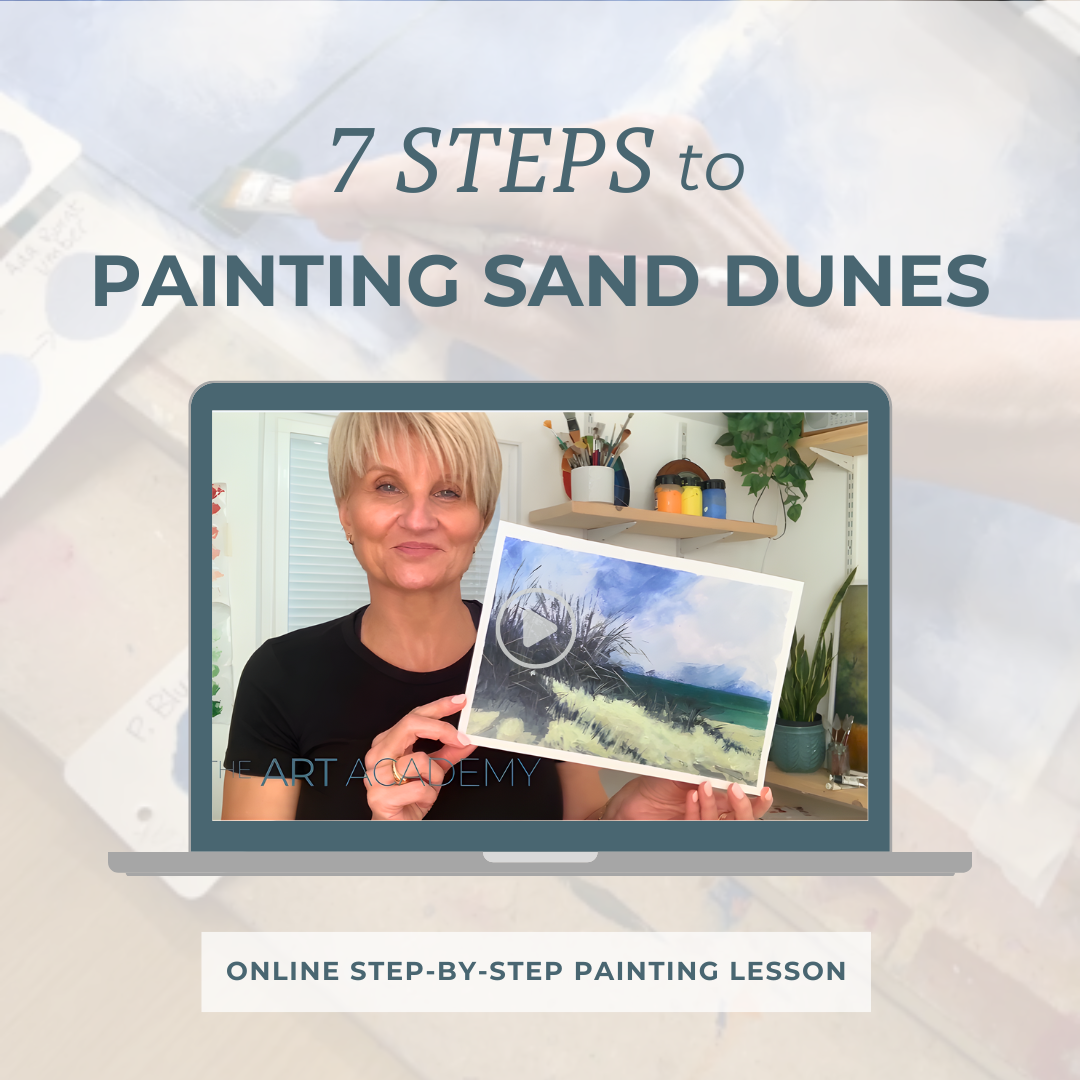
· Pick one subject: a single motif you enjoy and can render in many ways. For example, a vase with flowers, a single tree, your garden or a cup and saucer. Choose something you love. For me it’s the coast, but that is a vast subject so I can choose sand dunes as a more manageable project. Get my ‘7 Steps To Painting Sand Dunes’ online tutorial where I guide you step-by-step through painting two similar sand dune paintings in one session. This would be a great way to make it really easy to get started on the 30 Day method.
· To get the most from the plan, commit to daily practice for 30 days. I recommend that you keep your work small, postcard size for example and doable in 30–120 minutes.
· After each painting session, spend 5–10 minutes reflecting and jotting down one short note about what you tried and what you’d change (this means letting sensible brain back in but it’s only fair).
· At day 10 and day 20, review the previous pieces and identify patterns and preferences. You can ask yourself questions like…
What’s going on with my brushwork?
Have I used the same set of colours a few times?
Do I prefer to paint in a more realistic or abstract style?
Are my edges soft or crisp?
Do I use bold shapes or delicate detail?
Think about which days flowed for you and which were tricky. Plan for the next 10 days to be enjoyable so choose to use only the elements from here on in that bring you joy.
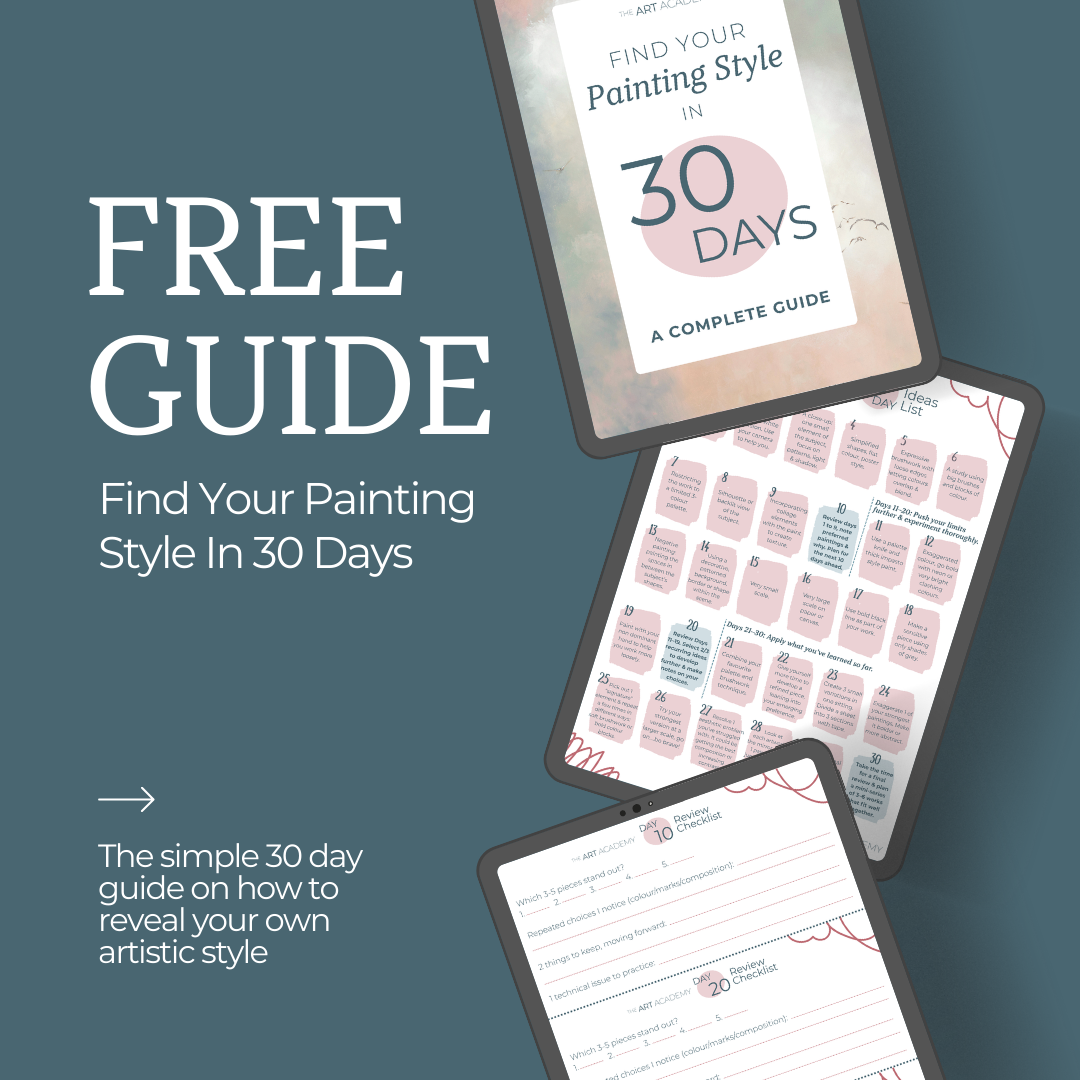
Download my free ‘How To Find Your Painting Style in 30 Days Guide’ to get printable reflection prompt cards that you can easily fill in.
My Top Tips & Suggestions
Keep materials limited to encourage focus e.g. acrylic on paper, gouache, watercolour, ink & wash, or oil on small canvas. It doesn’t mean you can only use these in future but will help you to focus for now.
Top tip…you could prepare all your surfaces for the month in advance.
Keep a visual record. A simple photograph or scan will do and store them sequentially ie 1 to 30. It’s great to look at your artwork on a digital screen. It’s like seeing it how other eyes would view it and may reveal some elements of style that the naked eye has missed.
Daily structure:
1. 5–10 minute warm-up with a sketch and colour test.
2. 30–120 minute painting session (remember sensible brain needs to be occupied with some music or an audio book)
3. 5–10 minute reflection and photo/scan.
Top tip…make sure to clean and set up your work area ready for the next day so that there is nothing to put you off getting started next time.
What to try each day to keep things fresh
· Your colour palette could be monochrome, complementary colours (see my blog about complementary colours here), limited 3-colour palette (see my blog post “What If You Only Need 3 Colours For Every Painting”), neon accents, greyscale, high-saturation.
· Explore the value, i.e. how dark or light things are, playing with low-contrast vs high-contrast.
· Scale and crop your image view using the full subject vs tight detail vs extreme close-up. You can use the photo facility on your phone or device for this.
· Explore perspective and composition using a top view, low angle, rotated, centre vs off-centre. You might want to ignore perspective and composition rules altogether.
· Vary your application of the medium for example thick impasto, thin washes, drybrush technique, palette knife or line work with brush or drawing tool.
· Think about lighting to express mood. Is it dawn, midday, the golden hour, artificial light or a silhouette?
· To work on the concept consider using realistic, abstract, cartoonish, expressive, minimalist or patterned approaches.
· Set yourself some other constraints like painting with just with 3 brushes, or only with palette knife, or restrict yourself to a single brush size.
· Vary your speed with quick alla prima studies vs slow layered pieces.
· Experiment with texture and support You could use gessoed board, paper with collage, textured ground or keep it simple with canvas.
The ‘How To Find Your Style in 30 Days Guide’ includes:
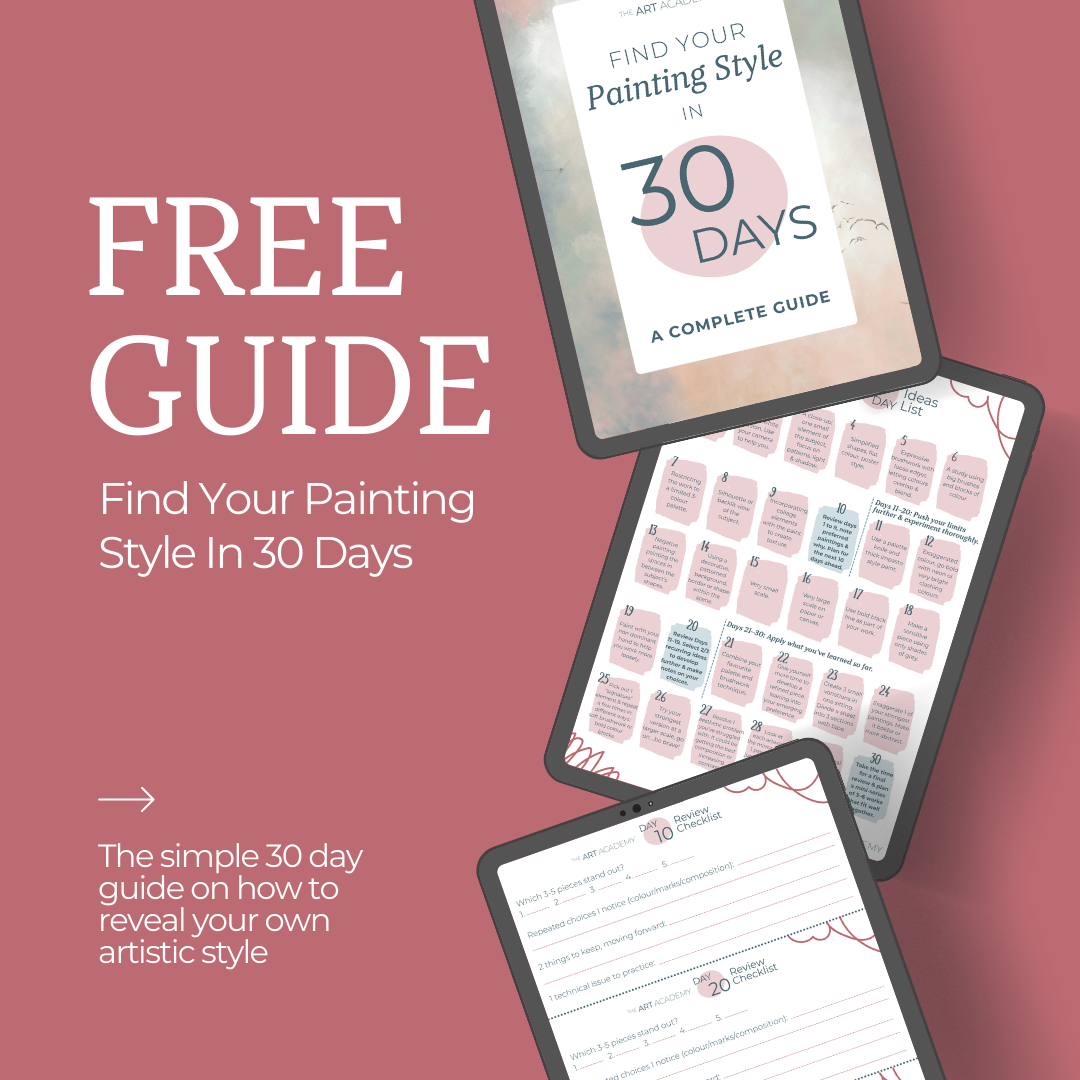
A 30 Day Ideas Calendar to get you started.
A 30 Day Check Off Chart so that you can visually check off your progress as you go. It would be great to paint each day with a blob from your palette and stick the chart up somewhere visible like on your fridge.
Daily Reflection prompt cards to help you reflect easily and quickly - this is one of the most important parts of the method!
Review Checklists for days 10, 20 and 30. These are vital for making sure that you actually start narrowing down your results to give you the best chance of truly finding your art style.
My Extra Top Tips For Success based on my 40+ years of experience.
The Questions To Ask Yourself to help you identify your emerging style at the end of the 30 Day method.
After the 30 days
Reflect on discoveries and decide next steps. Refine the strongest directions, create a cohesive series, or repeat the exercise with a new subject using your learned preferences. Use your curated pieces to write an artist statement highlighting the distinctive choices you’ve discovered.
Finally
Congratulate yourself if you have made through the whole month, and if you’ve had one or two days when you couldn’t manage it, don’t let that worry you. Sometimes life gets in the way. The main thing is that now you know how to access your inner artist, and you have a clearer idea of your own preferences and what you feel comfortable with. Your choices become visible patterns you can refine into a style. Remember also that styles evolve for artists over time, so you may see changes as you continue your journey. You need to be open to that too.
Different Ways You Can Learn To Paint With Me
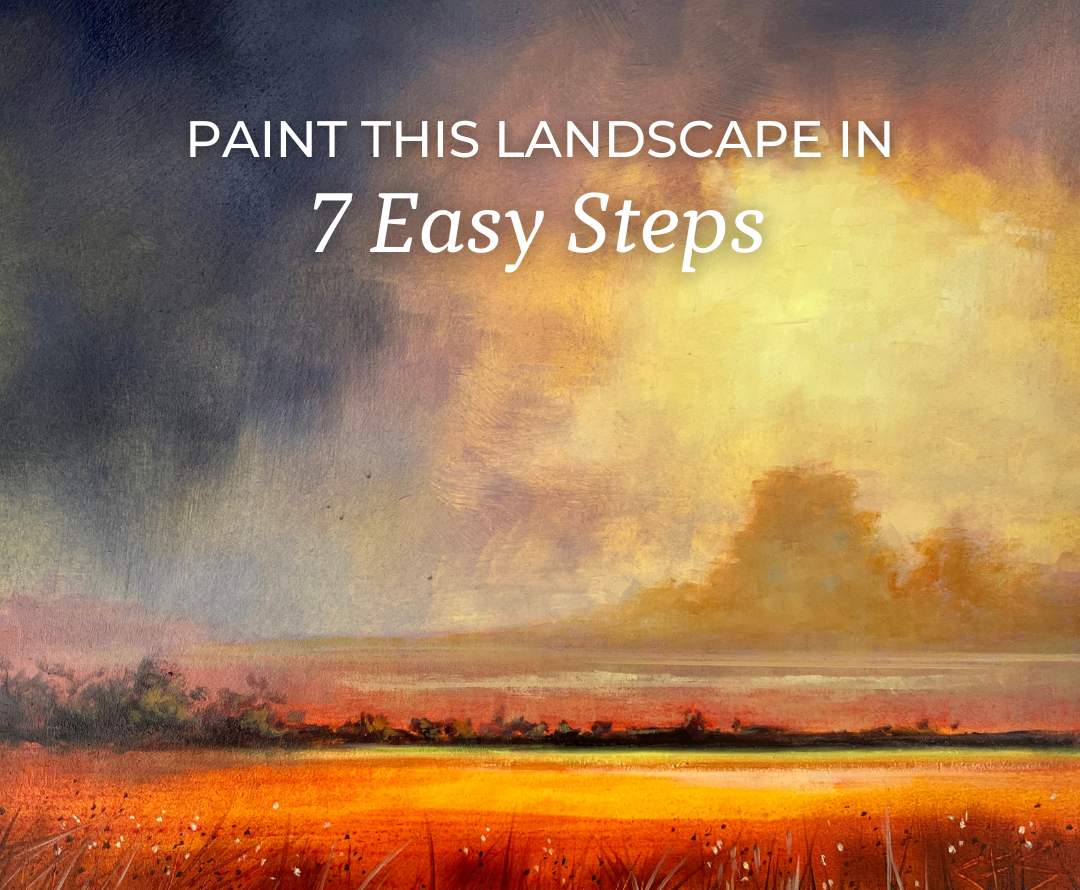
Learn to Paint at Home in 7 Steps with Professional Guidance
My collection of online painting tutorials help you to learn to paint in both acrylics and oils from the comfort of your own home.
The video lessons give you access to the same step-by-step demonstrations and supportive teaching style my studio students experience. I guide you through each stage clearly and at your own pace.
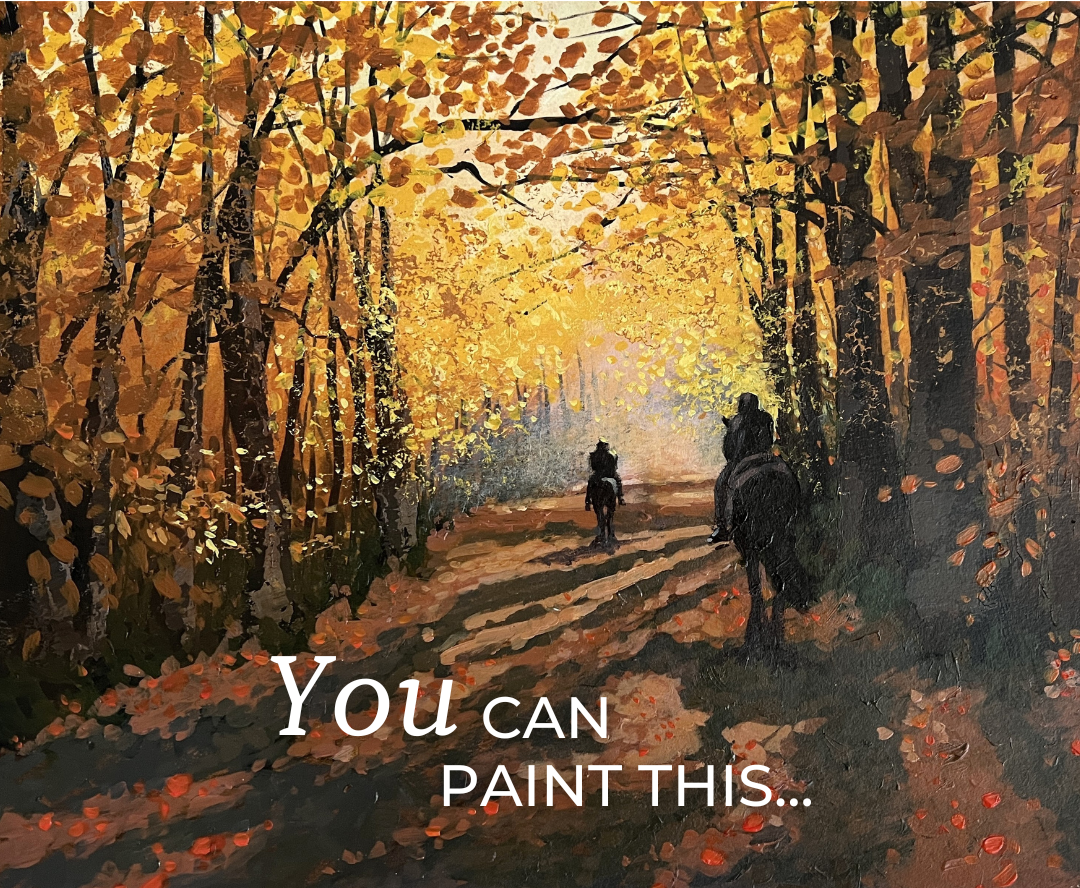
If you're a complete beginner picking up a paintbrush for the first time or looking to develop your painting skills, these paint-along videos are designed to build your confidence.
Starting from just £15 one off payment per lesson.
Weekly Workshops held in Norfolk, UK
Join me for a special weekly painting experience where you'll grow as an artist alongside like-minded friends who share your passion for painting.
Learn to paint in acrylics and oils as I demonstrate the skills and techniques that will help you to feel more confident in your own artwork.
The Members Studio is suitable for those with a little painting experience. To become a member simply choose a workshop that you would like to attend and book yourself a space.
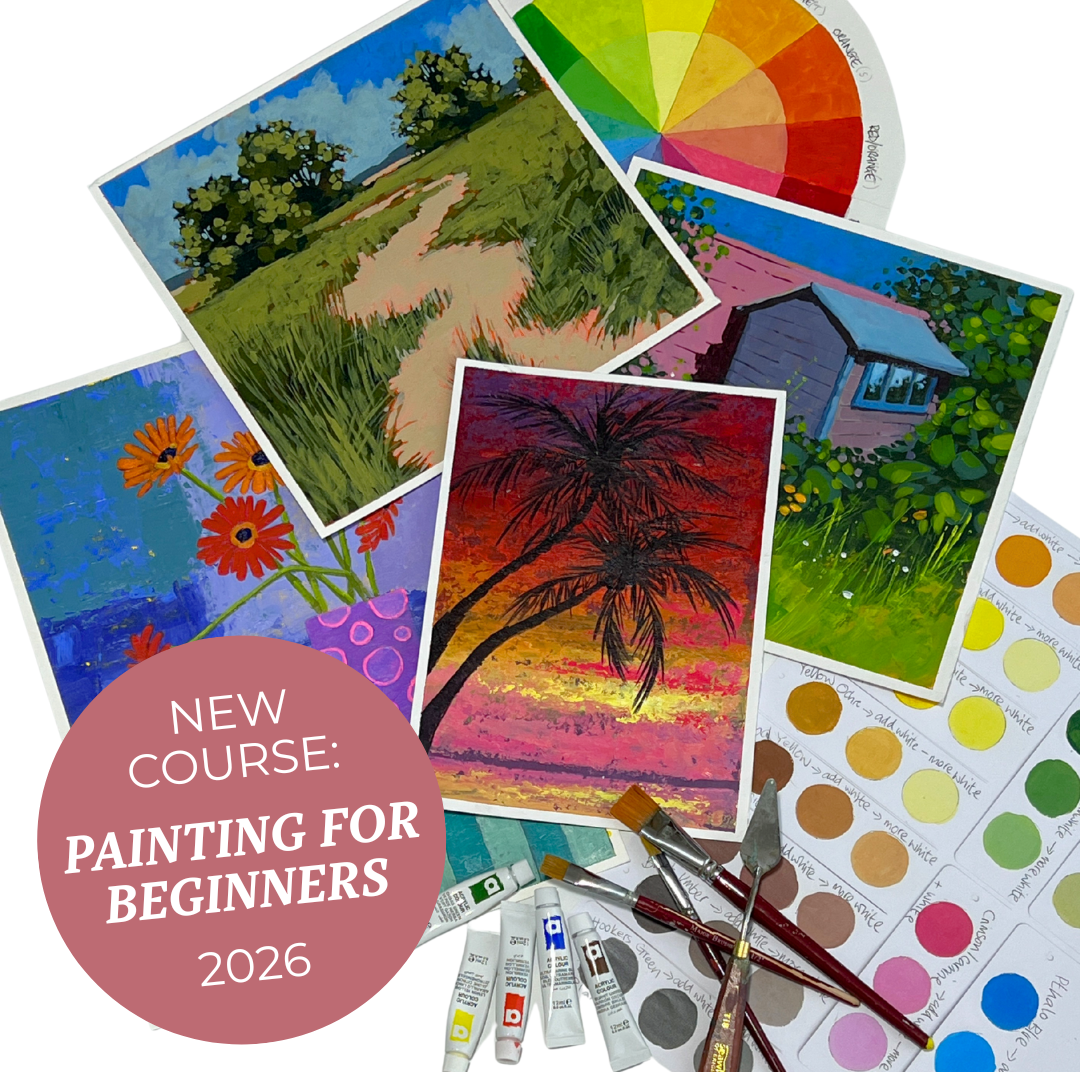
A Thursday Evening Painting Course for Beginners in Norfolk, UK
This course is perfect if you're completely new to painting or if you've tried before but felt a bit overwhelmed.
We're going back to basics in a light-hearted and supportive environment. Think step-by-step guidance, friendly faces and the kind of atmosphere where you can ask anything without feeling daft.
One evening per week, Thursdays, from 6 - 8pm.
Next Start date is Thursday 23rd April