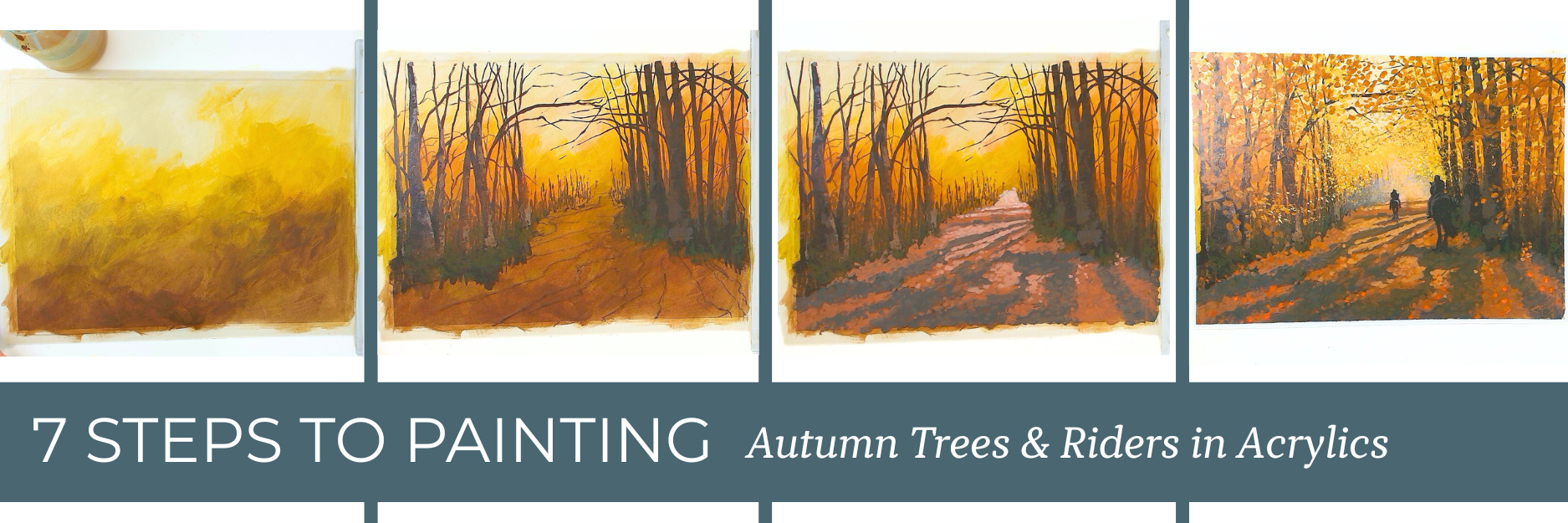
7 Steps To Painting Autumn Trees & Riders
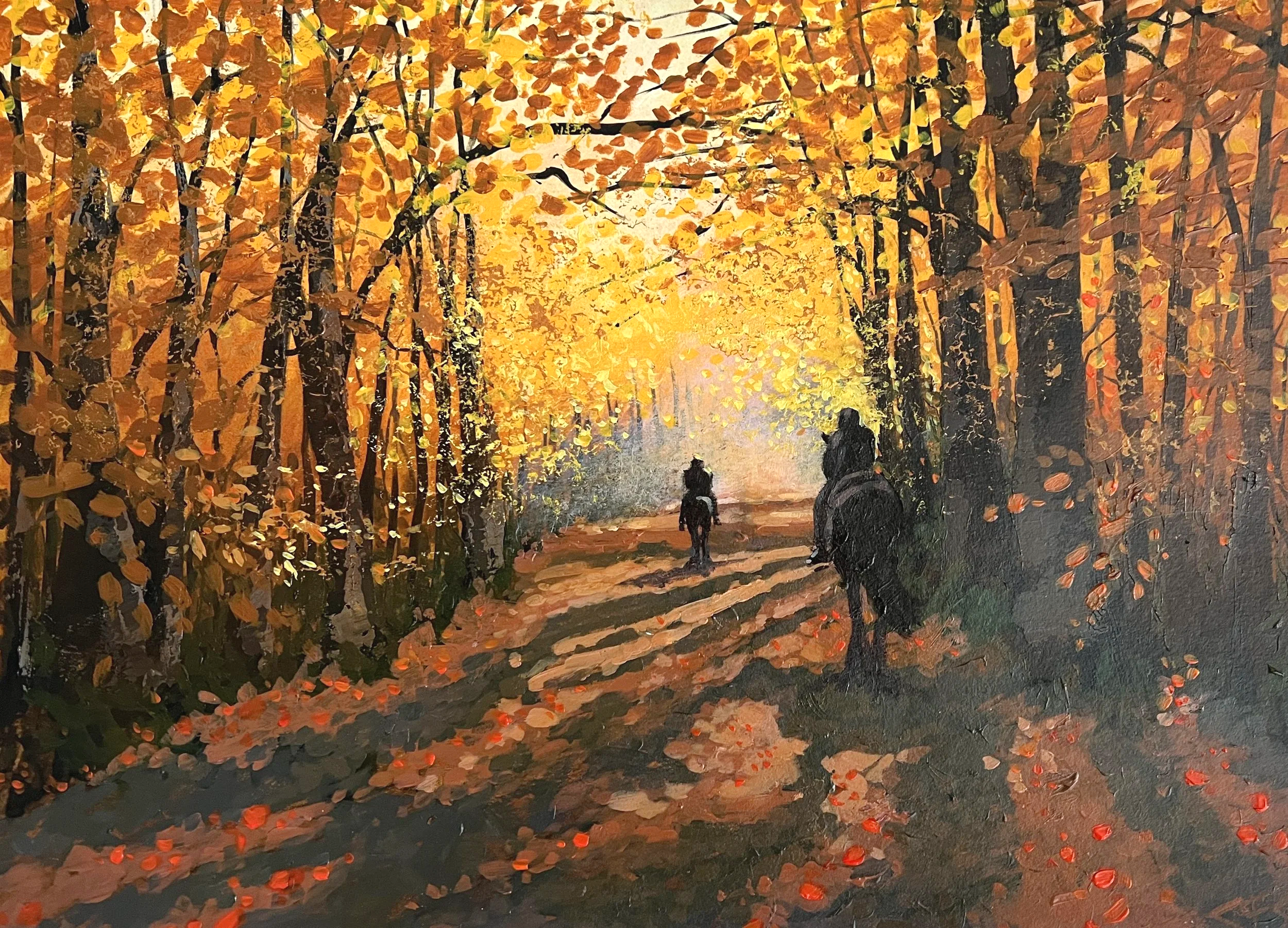
In this step-by-step paint-along course we will explore how to paint an atmospheric autumn woodland scene in acrylics, complete with dappled light, falling leaves, and distant riders moving through the landscape.
We’ll focus on capturing that fleeting autumn moment when golden leaves glow against darker trunks and long shadows stretch across a woodland path. It’s the sort of scene you might glimpse on a quiet country walk and want to hold onto just a little longer.
I’ll guide you through the painting in clear, manageable stages, showing you how to build depth and atmosphere using acrylics alone. We’ll work from simple shapes and tonal blocks through to layered colour, texture, and detail, so the scene gradually comes to life without feeling overwhelming.
You’ll learn how to suggest detail without overworking: how to paint trees as a group rather than individually, how to create the illusion of drifting leaves, and how to place figures and horses so they feel naturally part of the landscape rather than stuck on top of it.
This course is suitable for beginners as well as more experienced painters who want to loosen up, improve their sense of depth, and develop confidence painting figures within a landscape.
By the end of the course, you’ll have a finished autumn woodland painting and a clear, repeatable process you can apply to other seasonal scenes and subjects.
What you’ll learn:
Planning and structuring a woodland composition
Blocking in trees and paths with confident, simple shapes
Mixing warm autumn colours and rich, natural neutrals
Creating light, shadow, and depth in a woodland setting
Suggesting falling leaves and ground texture
Painting small figures and horses with minimal detail
Bringing the whole scene together with final adjustments
Materials:
Acrylic paints, acrylic paper or canvas, and basic brushes. A full materials list is provided.
£19.00 - One time payment
✓ Unlimited lifetime access
✓ Step-by-step guidance
✓ Full demonstration from start to finish
✓ Suitable for beginners
Please select ‘Preview Course’ to watch my free introductory video before you purchase this lesson.
Alternatively, click on ‘Step 1: Surface Prep & Underpainting’ below to buy this lesson.
You will be asked to ‘Sign Up’ to create a log in initially - this is so that you can access your lesson at any time.
-
Autumn Trees & Riders - Acrylics
-
7 Steps To Painting Autumn Trees & Riders in Acrylics Preview
Join me for this step-by-step paint-along course as we explore how to paint an atmospheric autumn woodland scene in acrylics, complete with dappled light, falling leaves, and distant riders moving through the landscape.
-
Step 1: Surface Preparation and Underpainting
In this first step, we lay the foundations for the whole painting by creating a loose, tonal underpainting in acrylics. This stage is all about getting the light and dark areas in the right places before we think about detail.
-
Step 2: Drawing the Design
In this step, we map out the main structure of the painting using a simple template. This helps you establish the canopy of tree shapes that gives the scene its strong sense of rhythm and flow.
-
Step 3: Painting Trunks and Branches
We’re starting to bring the forest to life by painting the trunks and branches. Using lighter tones and thicker paint, I’ll show you how to create a subtle three dimensional effect without getting caught up in detail.
-
Step 4: Glazing to Add More Glow
This is where the painting really begins to warm up. Using thin acrylic glazes, we gently build rich autumn colour over the existing layers.
-
Step 5: Shadow Patterns on the Pathway
In this step, we focus on the pathway, painting light and shadow to create a sense of distance and perspective.
You’ll learn how to suggest fallen leaves and texture with simple marks, helping the eye travel through the painting and into the depth of the scene.
-
Step 6: Light Through the Leaves
Now we turn our attention to the canopy. Using a mix of impasto brushwork and lighter touches, we build the effect of light filtering through the leaves.
I’ll show you a variety of techniques for adding small details effortlessly, so the foliage feels lively and natural rather than overworked.
-
Step 7: Adding Riders and Finishing Touches
In the final step, we add the riders to bring focus and narrative to the painting. These are painted simply, with just enough information to make them feel part of the landscape.
We’ll finish with a few delicate highlights and final adjustments, pulling everything together.
-
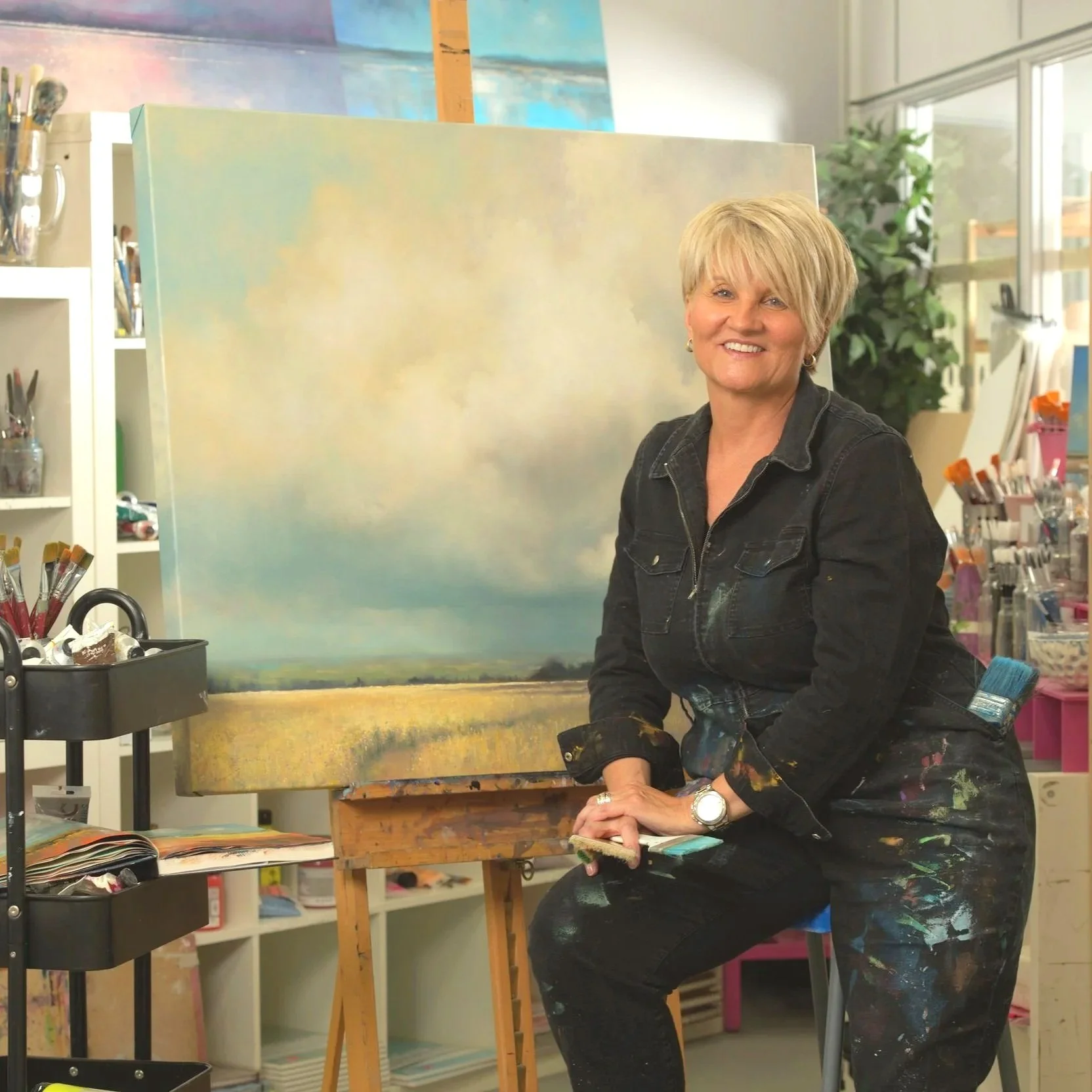
With over 40 years as a professional artist and 15 years running The Art Academy, I know what works and what doesn't when it comes to painting landscapes. This video gives you access to the same techniques I use in my own work and share with my Norfolk students. Clear, practical guidance broken down into manageable steps that anyone can follow. Real skills, clearly explained, no fuss.
Learn from Four Decades of Painting Experience
What you’ll learn
-
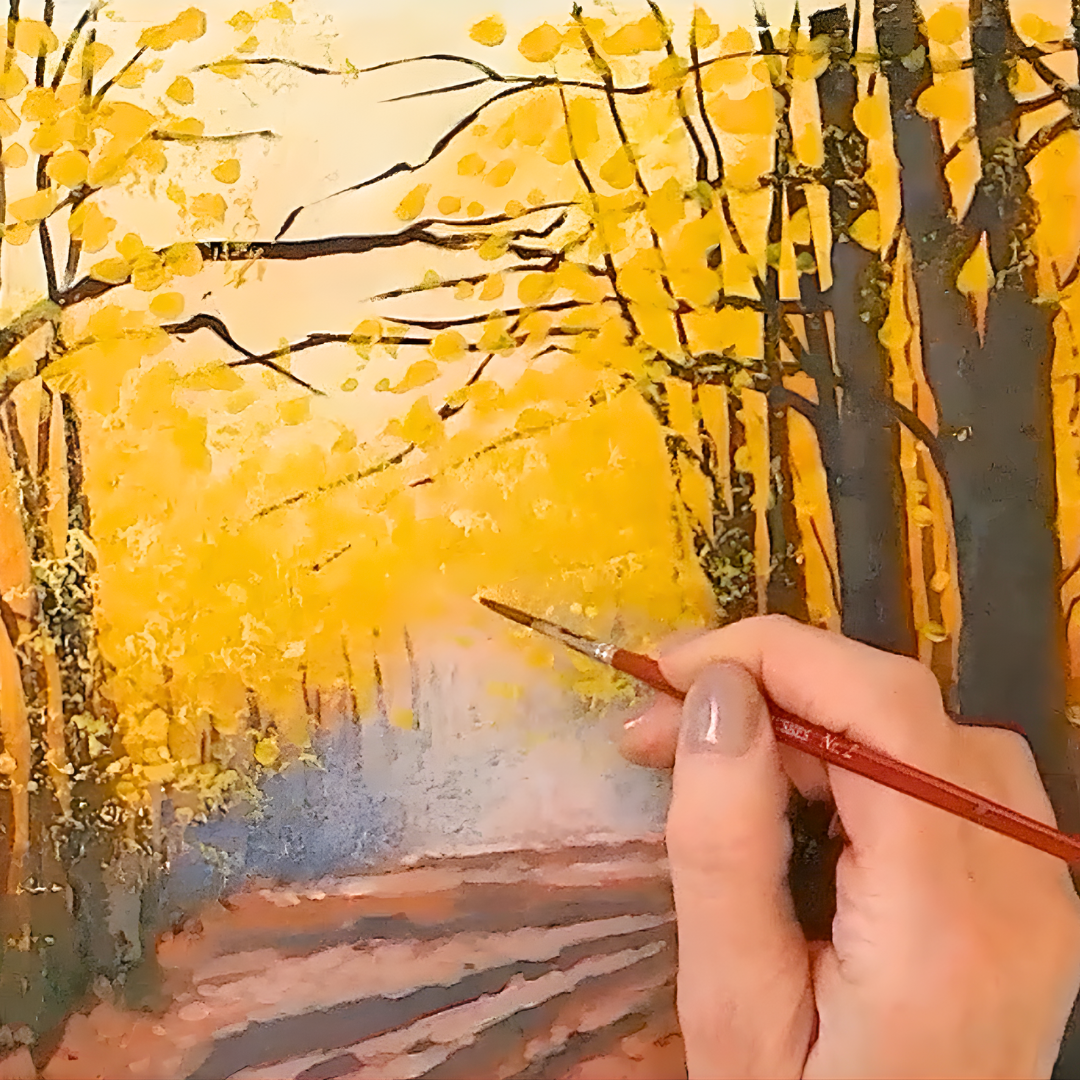
You’ll discover how to create a convincing sense of depth in a woodland scene by layering shapes, colour, and texture. I’ll show you how to simplify complex tree forms, vary edges, and use overlapping elements to lead the eye down the path and into the painting, all while keeping the process clear and manageable.
-
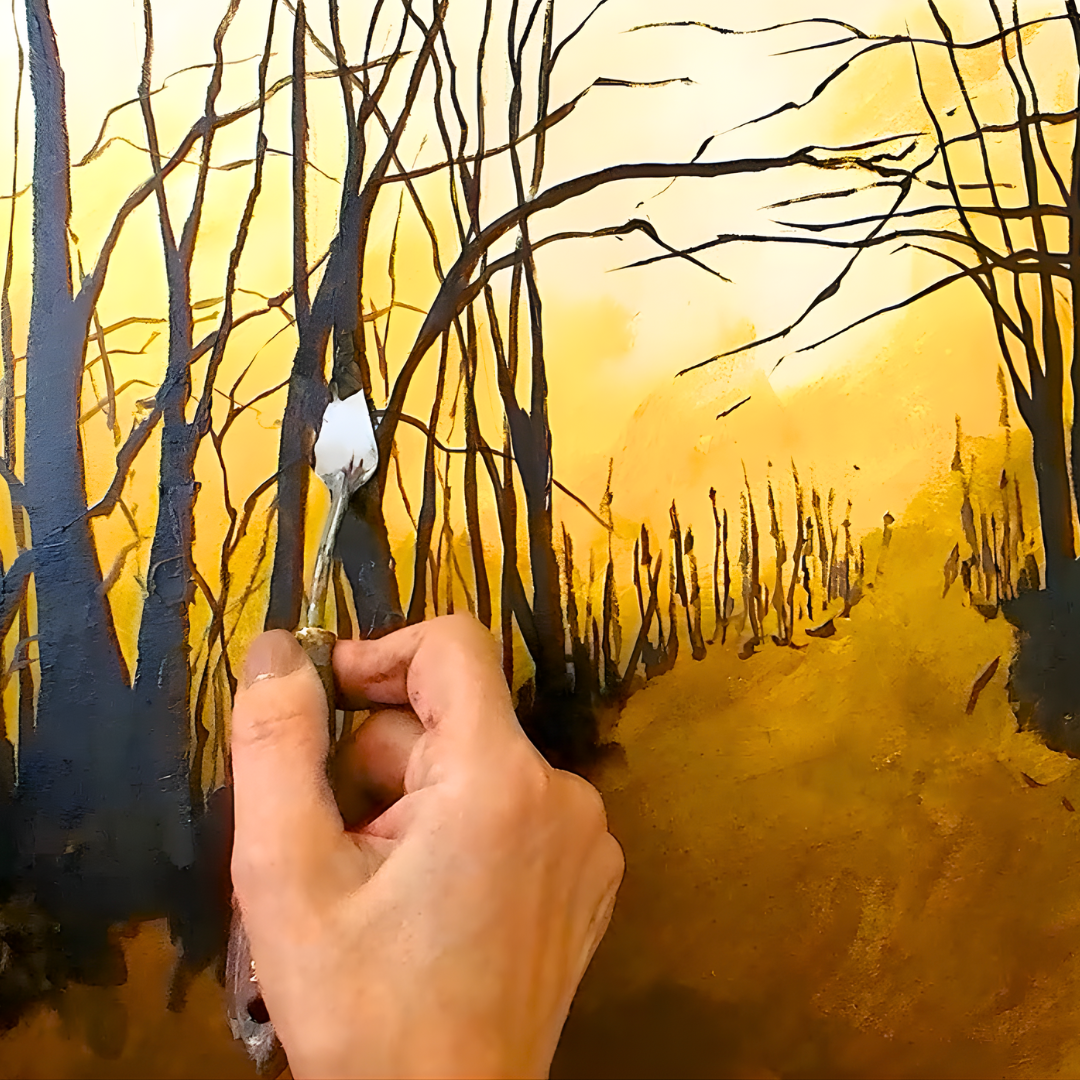
In this course, you’ll learn how to capture the distinctive glow of autumn. Warm light filtering through trees, strong contrasts between light and shadow, and the muted tones that sit beneath brighter colour. We’ll look at how to create atmosphere using tonal values first, then build colour gradually so the painting feels luminous rather than flat.
-
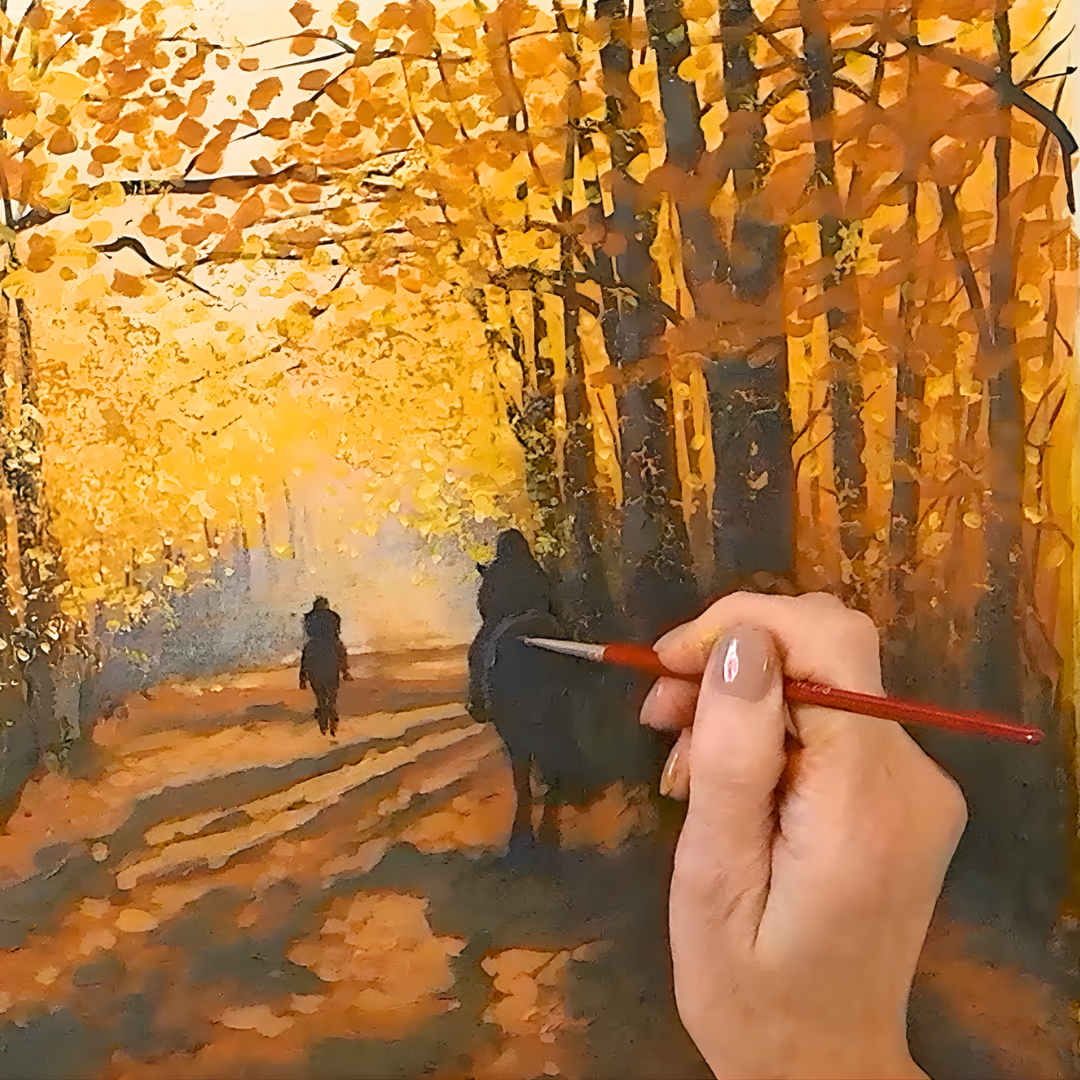
We’ll explore how to include riders and horses in a way that feels natural and unforced. You’ll learn how to suggest movement and scale with minimal detail, so the figures enhance the story of the painting without becoming the main focus or feeling overly precise.
Course FAQ
-
Yes. This course is designed to be accessible even if you are new to acrylic painting. Each step is clearly explained and demonstrated, starting with simple shapes and tonal values before moving into colour and detail. You do not need prior experience painting landscapes or figures.
-
No drawing skills are required. A traceable drawing is included to download and use if you wish, so you can focus fully on the painting process rather than worrying about getting the drawing right. I also explain how the shapes are built, so you can begin to understand the structure as you paint.
-
You will learn practical acrylic techniques for blocking in, layering colour, creating texture, and building atmosphere. The methods are transferable, meaning you can use them again for other woodland scenes, autumn landscapes, and seasonal paintings.
-
The course is broken into seven clear steps, allowing you to work at your own pace. Some students complete it in one sitting, while others prefer to spread it over several shorter sessions. You can pause, rewind, and revisit any part at any time.
-
You only need basic acrylic paints, brushes, and acrylic paper or canvas. A full materials list is provided so you can check what you already have and avoid buying anything unnecessary. The colours needed are: CADMIUM YELLOW, BLACK, BURNT UMBER, TITANIUM WHITE, BURNT SIENNA, VERMILLION/RED
-
Yes. The course encourages a relaxed, layered approach that helps you let go of overworking and overthinking. Many painters find it particularly helpful for building confidence with colour, brushwork, and compositional flow.
-
Absolutely. The process you learn is designed to be repeatable. Once you understand how to build depth, light, and atmosphere, you can adapt the approach to other autumn scenes, forests, paths, and figures in landscape paintings.
-
After signing up, you can access the course online at any time. Your lessons remain available, so you can return to them whenever you want to refresh a technique or repaint the scene.
Looking for More?
I've got other courses below if you want to keep painting.
We're busy uploading more content behind the scenes, so there'll be new courses coming soon. Leave your email below and I'll send you a message when they're ready.